
Artificial intelligence is transforming mortgage lending, but one critical challenge remains: uncertainty. In this week’s Weekly AI Update, David Lykken welcomes leading scientist Professor Arin Brahma to explore a groundbreaking innovation in uncertainty-aware machine learning that is changing how AI makes high-stakes decisions. Together, they discuss why traditional AI models can create hidden risks, how deterministic AI improves transparency, fairness, and compliance, and why this research could reshape the future of mortgage lending and other highly regulated industries. If you’re a mortgage executive, lender, fintech leader, or anyone interested in responsible AI, this conversation offers a compelling look at the next evolution of trustworthy decision intelligence.
[David] Listeners, it is time for another AI update sponsored by Angel AI and our friends Pavan and the company there with Celligence, who is a pioneer in responsible AI risk-aware decision intelligence for banking and services. In a publication of a white paper this past week, Angel AI announced a major leap forward in AI governance. In collaboration with our guest today, leading scientist Professor Arin Brahma, Angel AI has unveiled a cutting-edge, uncertain uncertainty-aware machine learning framework designed to eliminate the costly blind spots of traditional AI models. Yes, there are blind spots in the models, and we’re gonna hear all about it. Dr. Brahma. Which we’re now, you kindly said, please refer to me as Arin. So listeners, I’m not being disrespectful to Dr. Brahma, but he said, call him to Arin. So, Arin, welcome to the podcast.
[Dr. Arin] Thanks David. I appreciate the opportunity and it’s my honor to be at your podcast. Thank you very much.
[David] It’s an honor, especially with what you just presented. The paper, I believe, is what I pulled off the press release was designing a deployable machine learning development framework that operationalizes trustworthy predictive applications in the medical field. And you presented this, is it the 2026 in Munster, Germany? Is that correct? Am I saying that correctly? Well, very good.
[Dr. Arin] That’s correct. Perfect.
[David] You know, what what I’d love to get, first of all, there’s a lot of parallels between finance and the mortgage industry and medical. You go like our listeners may go scratch their heads, how is that? Well, because decisions that are made in finance or decisions that are made in medical are very critical. You cannot be making mistakes with that. This is not a trial and error scenario. This is a life and death scenario. So we’re looking in mortgage finance. It may not be life and death, although when someone thinks they’re getting a home and they find out it was misdiagnosed or misunderwritten, they’re not. That can seem like life and death for them. But let’s talk a little bit about in simple terms, what problem were you trying to solve in the medical field and then let’s build a parallel to the mortgage industry.
[Dr. Arin] Thank you for the question. so yeah, it’s a good question because if you read the title of the paper, it looks very complex, almost not intuitive. So it’s a great question. I’m happy to have the opportunity to clarify that. So first of all, I want to say that application of this innovation, medical feeling just being a test case, but is the innovation is not, doesn’t have a boundary of a medical field. It applies, specifically applies to fields which are very compliance-oriented, life and death sensitive, or financial disaster-sensitive, or litigation-sensitive, compliance-sensitive, regulation sensitive. So, it addresses all those kinds of domains and the innovation was made, keeping those in mind. And also trying to understand where the current AI lacks and that was the motivation behind this. And at the onset, I want to also acknowledge that I’m the first author of this innovation, but there are three other co-authors as it will be printed in the paper. I just acknowledge that. Yes. So the problem we’re trying to solve is okay. So you know, let’s distinguish between the AI. Which is used for self-driving cars or even the chatbots to do conversation where the job is typically to understand the language and respond back in a natural language. But this all happens in the back end, which today is called you know, when the decisions are made in the back end by AI engine, today is called agentic AI. Okay, have the jargon for that. so this addresses that space of making those decisions. Which is now automated using AI algorithms. So it’s a good and bad both, right? The automation gives consistency and speed, but then also exposes you to various kind of risks if the decision is wrong, right? So that is where I think what’s going on today versus what this innovation is leading to is different. So let’s say how it’s done today. So I’m talking about back-end AI, industrial AI. AI models are built using lots of data available. Okay, for example, in our case, we use almost hundred thousand actual data of a hospital from pre-COVID to post-COVID period, everything together. Okay, so this data is used to build a model, and then different models are built using various algorithms. And now they are like a competition kind of race to see which algorithm has highest performance and typically the performance measured is like accuracy, F1 score, and recall, and we talked about sensitivity, specific specificity, things like that. Okay, that’s how it’s compared which one wins the race, right? So, once so the model with the algorithm that gets the highest performance is typically is deployed in the field. Now, what is the problem in the scenario? The problem in the scenario is you use data for last five years and now you deploy it, which new data coming in, which pattern, randomness could be very different. Imagine you built a model for underwriting last 10 years of data, but today a lot of environmental things have changed. So when you put the model in the real field, you can’t expect the all the applications coming in exactly following the same pattern as the previous, you know, previous 10 years of data. There will be some variations, right? So how is it handled today? Is it not addressed today? It is addressed today. What happens? Company rolls on a model and sees why it makes mistakes, collects the data of those errors, tries to reprogram the model again, and releases the next version six months later or you know one year later. That’s okay. But not okay for the in a financial service and medical field. Because you cannot you can let you let the model make those errors just keep improving it, that only way to face these data variations is by collecting the data when actually put into practice. So that’s a problem, right? so which is called data uncertainty. So could he build a model right off the bat which is aware of these uncertainties before this actually experimented with in the medical field and the mortgage field or banking, which could be could be disastrous, could invite litigation, liability, so many things, right? So that was the motivation. And that’s the problem we are trying to solve in the fundamentals of how AI is used to make predictions in these kind of domains.
[David] Yeah, it’s it’s so face fascinat how even though we’re using empirical data that came out of historical records, there’s a bias built into that. And that can lead us today to wrong conclusions. Explain the innovation and why it is so groundbreaking. It is groundbreaking because everyone’s been relying on AI as if it was factual and this is that. But it’s not. So I can’t wait to hear your explanation.
[Dr. Arin] AI is fundamentally prediction. It’s about having a crystal ball to see the future, right? and we are constantly trying to make that crystal ball better and better and better. And then the decisions are made based on these predictions. Now, if the prediction has a lot of uncertainty built around it, then this automated decisions will be very dangerous and this innovation addresses that right off the bat. which so that’s another symptom is that a lot of machine learning or AI models that published by researchers, and we did some survey of the past work, we found almost more than 70 research models that got never implemented in the medical field. because practitioners are not very confident on these models because they haven’t addressed their concerns so that was kind of a light bulb went up. Why is these are genuine great models, well researched models, done by you know a lot of good researchers. Why are they not being implemented in practice? So that was kind of motivation on that and we created a new the foundation of the models are mathematical computations that actually extracts the art quantified quantifies the uncertainties in a number and then compares between the traditional performance of models versus uncertainty quantification and kind of do a trade-off between the two and what we found out for the medical field that the models that are chosen because of performance, high performance, but the uncertainty level is really really high. So it is better to choose a model with slightly less performance but more certain and that really addresses the need for financial services, mortgage and medical field and singular fields.
[David] Yeah, I’m really interested in your perspective of why AI adoption has been slower than expected in high-stakes areas, such as healthcare and mortgage lending.
[Dr. Arin] That’s a good question, and I actually that’s one area we explored in our paper, and we found there’s something called trust gap. We call it trust gap. yeah, trust gap. Yeah. So we define in the paper trust gap to be prediction uncertainty because the uncertainty of prediction is not.
[David] It’s traditional uncertainty.
[Dr. Arin] Yes. I mean, uncertainty means how confident the model is. For human beings, same thing. When you make a decision, how confident we are about making a decision. And AI model does nothing except making a decision, right? and the decision is now converted to some kind of action. either by machine or by human being. so yes, so the uncertainty part that means lack of confidence in in in other words. Okay.
[David] That’s a confidence factor that goes into one thing that Jennifer that works with Pavan, I’ve had her as a guest numerous times, brilliant, amazing person, as well as Pavan, they talk about probabilistic versus deterministic. So when you’re looking at these two, how does your paper relate to this? It sounds like it’s more deterministic, but even in deterministic decisions, is there some uncertainty that could be built in there?
[Dr. Arin] Yes, so as now every prediction is probabilistic, but as you know, as Angel AI really through the innovation, they move the probabilistic needle to more towards the deterministic side. Okay. So more you can use technology and statistics and mathematics to move that probabilistic needle to more deterministic side, more robust are your decisions. So this is another innovation that is moving the needle. From probabilistic to deterministic. But that every prediction is some probabilistic. Even if as a human being, we make a prediction, are we 100% confident that’s going to happen? It may may not happen. So all decision, all decisions about the future is somewhat probabilistic. But the question is how much we can move the needle more toward the deterministic side. That’s where technology and innovation research comes in. And this is this is this is what contributes to that.
[David] Yeah, it’s significant. I mean, what is significant about the desert to a two thousand twenty six conference? Where will this work be published?
[Dr. Arin] Number one conference, international conference for design science researchers. A design science researchers focuses on building artifacts based on research grade innovations and you know and research. so this was a perfect place because we ultimately designed an artifact or actually a framework and a software, you know, to solve this problem. it’s not just theory. There are theoretical research versus practical research. So this falls in the practical research aspect of the research, you know, in the domain. So is number one international conference on that. And it will be published in the in a journal called LNCS, which is Lecture Notes in Computer Science, which is published by one of the top publishers, Springer. So it will it will be published there, probably on its way to be published very soon.
[David] Yeah, you know, I’m thinking I attend and speak at a lot of conferences myself. And I’m thinking about in the when you’re sitting around at a restaurant or in a bar afterwards and everyone’s having to shop talk. I can only imagine what this sounds like when you have this caliber of people sitting around talking about this. You know, the research is just amazing what you’ve done using the data from pediatric hospital, which I found was interesting. Why the pediatric hospital? So does this mean angel AI is not just for mortgages?
[Dr. Arin] Absolutely. Angel AI is a very scalable, very robust platform. And it gets data and produces some action. And Angel AI, entire software, entire platform can apply to any domain. so right now it is being finished up to the domain, but it is absolutely baked for any domain. Especially domains which is sensitive to regulations, compliance, you know, things like that.
[David] That’s it’s so how did you connect with Pavan? I’m always interested in how these connections happen. I mean I met Pavan when he was eleven years old by doing business with his dad and now we’re intricately involved in each other and what we’re doing together. It’s just so fun to see how these connections started. How did you meet Pavan or how did Pavan did Pavan seek you out based on this knowledge or this paper?
[Dr. Arin] Very interesting history again. I know Pavan almost more than twenty years back. and I was working before becoming a professor and having a PhD, I was a technology consultant you know almost 20 years in my life. And during that time I was working for a mortgage automation software company. And I went to a college, and I co-founded a company actually which automates mortgage. So that time mortgage was so paper sensitive, paper intensive. we our mission was to convert everything to digital processing so that it can be done from any location, doesn’t have to be in one single office. So that was a platform that I developed, and the company was founded based on that. so I went to a conference and Pavan had a booth in the conference showing off his LOS system. So we got acquainted and it happened to be he’s from you know Southern California and happens to be some serratus, and I was from Southern California as well. So we made the connection that way. We actually worked together using his LOS platform to be integrated with our servicing, our mortgage originations platform, which can be a digital platform which can be used to do look processing from any location. So you know that’s how relationship started…
[David] Yeah. Well, and you know, I I listen to Pavon and I just stand there. I don’t even sometimes it just my brain just cramps as I’m listening to talk about his vision and things like that. But it what you I’m so glad that you two have partnered on this because what we’re trying to solve here is so critical, especially in the medical field, but I think equally so in the financial. We need to have financial certainty. We cannot be dealing with uncertainty and the more certain it is, like what Pavan’s vision is, is to take it further down to the unbanked, bring it to the people that that do not have access to financing for reasons where some level of uncertainty exists in their credit profile. You know, I’m really interested in the intuition. what does it mean for AI to have intuition? And is that even possible?
[Dr. Arin] Good question. And I know as soon as you talk intuition, those kind of thoughts come to our mind because you always compare machine with the human be human capability, right? Now I want to clarify that it should not be confused with like human emotion or guesswork or mysterious gut feel. that’s not we’re talking about. We are talking about a structured ability that has been mathematically derived and implemented, which can recognize patterns, also it can recognize the reliability of those patterns. For example, typically machines or you know ML models or AI models does a prediction and gets some kind of confidence about that particular decision, right? human being will also make decisions, underwriter will make a decision. And but at the gut feel, although decisions is based on the applicant’s records and all those things, still there’s a question: Am I still making a right decision? Should I deny the loan? Even though math is working out, right? So that comes with experience, right? Which is very valuable. Underwriter’s experience, not just with the numbers and freight scores of the applicant, right? So far, AI model has not been addressing that. AI model also crunching numbers, the patterns, and making a decision. But what is new right now is that AI models right now can also mathematically try to understand that is it, should I or should I not approve this? Right? If in case there are the real of data variation is a lot more than what I was trained on. See, so far AI models makes decisions based on based on what is trained on. But now we are making decisions what is trained on plus the possible data variation that can happen. Which is bound to happen in the future. So that moves the needle from probabilistic to more deterministic.
[David] Yeah, that is that is so fascinating. You know, we talk I’m a DE underwriter, a direct endorsed underwriter for the government. So I know what you’re talking about when you’re talking about that gut feeling. You have all the facts before you, but and the facts may be saying decline this loan. But you look at it and you go, My gut is telling me. And I think that kind of I love studying brain science. I think that comes from the limbric side of the brain. The question is I thought that was an intuitive side, but now we’re learning more and more that facts, more the subtleties, the subtleties of the facts are going into that limbric side where we say, I have a gut. You can’t explain why, but you just feel this is a good loan and it should be done and that’s what I get so excited about is not doing irresponsible loans or taking unfair medical risks. Arin, I’m more interested in including more people in homeownership or getting them medical procedures that will work for them that were being left out. And I’m really fascinated about you helping us understand the gut feeling decision making process of underage and how AI is gonna improve on that. Fascinating topic.
[Dr. Arin] And also, as you pointed rightly, David, because you have so much experience on underwriting yourself, it has fair lending. Because although a senior underwriter’s experience is a gold standard, because as you say, even though all the data lines up, still you might have a gut feel to accept or reject the loan, right? But it can be human, it can be inconsistent, right? There could be bias. Today you’re in a good mood, good health. Maybe your decisions are all good. Tomorrow maybe under the weather and not in a great mood. It could be also there could be, you know, bias based on a specific type of loans that has been always being processed, right? So now that can be taken over by AI to make it more consistent and fair. So I think it has huge impact on fair lending itself. And I think Pavan is always very, very mindful about making his platform very much in a fair learning oriented. So it’s a perfect fit for Angel AI.
[David] Yeah, it is fair landing is a form. Yeah, Angel AI being fair landing. You know, it it’s just so amazing that you had some background on mortgage lending. I’m sitting here just thinking I’m standing at that’s probably one of the aha moments of this whole interview is you came out of you’re writing papers now that’s being read at the medical conferences and now you’re at or AI conferences, You know, how is Angel AI applying this framework in the TLM architecture?
[Dr. Arin] Publication. I published two more papers in A Star journals using in the mortgage field. so yeah, yeah. And those are done in collaboration with Angel AI, they are you know and permanent data, mortgage data and everything. So, you know, I wrote those paper based on his data and his problems. So yes, so two other paper if you search on internet you’ll find two other publications specifically in a mortgage area
[David] What Pavan refers to as TML architecture.
[Dr. Arin] Yes, so TLM’s has a transactional language model. So which basically means forget about language understanding in a transactional field where approving a loan and updating someone’s bank statement or bank account cannot have cannot you can have an error on that, right? So it is very transactional in nature. The margin of error has to be very, very low, right? so Angel AI has autonomous cells, which are basically agent AI agents, which make sequence of decisions in the TLM architecture. Now each of these cells are trained using some kind of ML or AI algorithms. So now they are using this new innovation to also again move the needle from probabilistic to deterministic by incorporating the uncertainty aspect of that which is going to make it even more robust in terms of making more deterministic. So that’s how Angel AI is using it in the back end with all the AI agents that comprises the Angel AI TLM platform.
[David] Yeah. The whole concept of the cells that it’s woodworking is so brilliant the way this has been designed. And the more I learn about it, the more I guess stand in awe of this whole technology. why do you think this is so important to fair lending? It’s almost a rhetorical question, but it’s it but there I wanna make sure our listeners understand that.
[Dr. Arin] Yeah, so fair lending, a approval or a decision cannot be just accurate. It got to be accurate, but it has to be consistent, it has to be explainable, and it has to be audible. Right? just making a correct decision does not meet the standards of fair landing. So what it is doing, whatever decision AI makes, it is recordable. For example, a human or it can be auditable. When human underwriter makes a decision through intuition. It is not recorded. There is no audit trail, right? A decision could be a great decision, but it is not recorded track. So here, any decision AI makes all traceable. And that’s why it is inauditable and it’s based on
[David] I love that it’s traceable. That is really a key, especially when it comes to the compliance part of this thing. When you’re defending a decision you made that may be being challenged by fair lending, the fact that it’s traceable, verifiable, conferable. I mean, Jennifer was talking about that in the recent interview that we did is fascinating.
[Dr. Arin] If for example, a loan got denied, right? And six months, two months later, you get sued because the borrower feels that it was subject to some kind of bias, should not have. So you have to be able to trace that. You have to be able to reproduce the same situation, same decision again, right? And it has to be consistent with other borrowers. So imagine if it is all decisions are made by human beings through every step of the way, how hard it would be. AI makes it traceable, reproducible, and makes it consistent. So it’s a it’s a kind of it’s a gift to fair landing paradigm, you know, that all these things can be done right now.
[David] It should take a lot of those people that work in the compliance department or the business owners who have who are really the ones standing on the risk line with their personal net worth and their corporate net worth. it gives them much relief and they should be paying attention to this. Listeners, I’m telling you, the understand the importance of a deterministic, traceable, verifiable, and taking out as much of the uncertainty as possible out of these decisions. It’s really important. One of the things I love about Pavan, he is protecting his inventions through patents, as we all should. There’s nothing wrong with that. But what does this mean for angelized moat? We’re talking about a castle, a moat going around and protecting it.
[Dr. Arin] Yeah, yeah. A good question. So I believe the moat doesn’t come from just filing for a patent or even getting a patent. A lot of companies, you know, files patent, innovation happens, never applied. You know, but what is different, Angel AI that you know all this innovation that is being patent, you know, being filed for patent are actually implemented within the system. So it is more about how Angelia ganghua about implementing the innovation than just apply for patent. Yes, patent secures your right. But actual mode lies in the implementation of those patented ideas. So I think that’s where Angel AI stands out to in you know
[David] Dr. Arin, this is so fascinating. If this works as intended, what changes for lenders, borrowers, and for the mortgage industry, what does this mean? What is it gonna be the
[Dr. Arin] I would say there is a kinda gold rush or a craze to use AI wherever is possible. But I think the decision maker executives and the CEOs, they should drill down a little bit more detail and see the uncertainty aspect has been taken care of or not. Reproducibility had been addressed during the design and development note. You know, so those needs to before they you know just blindly automate. and there are so many model options these days, you know, there are no there’s plenty of options where to choose a model from, but they should definitely strike a balance between the prediction accuracy and the how much uncertainty has been addressed in the design. So just highly the best performing model may not be good if the uncertain aspect has not been taken care of the way this framework innovation does. So there’s a trap there. So I would my you know my few words would be to be mindful of those decisions.
[David] Yeah, so good. Well, I hope you will come back and do more in the in the mortgage space after you’re finished transforming the medical space. Yeah, the last question I have is what is the one thing mortgage executives should remember from this research, from your research?
[Dr. Arin] Uncertainty, uncertainty, uncertainty. Because no matter how much you rely and believe on this magical prediction of AI, there are uncertainties involved. And those uncertainty on if the model design development doesn’t include those uncertainty management, then those models, no matter how good it sounds, are highly risky. And I think r you know risk aware or domains that is pretty vulnerable to risk and compliance, that becomes more important managing uncertainty than the prediction accuracy itself. So that’s what you know my takeaway will be for the executives.
[David] I can’t wait to have you back as a guest again to talk about new papers you’re publishing. I got a feeling that there’s a lot more that’s gonna be gone. When I was on Facebook looking at I was watching professors of yours that you’ve had congratulating you on your research and the publication of this. There’s you’re making a lot of people that have helped and contribute to your education proud. And I’m just an honor to have you here, Arin, to be part of this and giving some new insights. We definitely would love to have you back. Let us know when you’re publishing. Pavan will probably tell me about it, but if next time you publish something, we want to learn about it and learn how these two worlds, the medical and the mortgage, actually relate other than there’s two M’s in the word.
[Dr. Arin] I appreciate and I will be very happy and honored to be in your podcast again. Thanks for the opportunity. And mortgage, I am very passionate about the mortgage industry because I have been 20 years of experience on that. And I have been working with Pavan’s team on the Angel AI in terms of you know different all of designs and innovation itself. So I am probably work more on the mortgage than medical field so far. So definitely my future publications will be on the mortgage area as well. So It’ll be a pleasure to come back to you and talk about them.
[David] I can’t wait to learn more. We’ll be hearing more from you, I’ve got a feeling. Congratulations on your success on this paper and again what you’re doing in the medical field. And we welcome you back to the mortgage anytime you get ready. Good to have you with us. Have a wonderful time. Thanks for making time today.
[Dr. Arin] Thank you. Thank you, thanks David, likewise.
[David] You bet.
Important Links
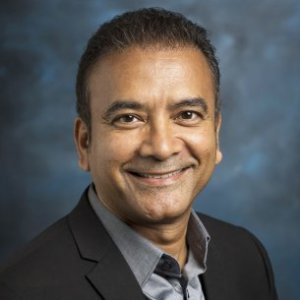
Arin joined LMU as a tenure-track assistant professor in 2018. Prior to that, Arin served as a full-time clinical assistant professor at LMU from 2013 to 2018. Arin’s areas of expertise include machine learning, big data, operations management and supply chain analytics, and robotic process automation (RPA), with a special focus on the healthcare and financial services industries.
Arin’s research areas of interest include AI/Machine Learning in medical informatics, health IT, and financial services. Arin’s research is application-centric and incorporates Design Science Research (DSR) methods when appropriate. Arin has presented papers in top academic conferences such as ICIS and DESRIST and published research papers in top IS journals such as DSS and JASIST. Arin also contributes to the community of scholars as an Area Editor of Health Systems Journal (Taylor & Francis: https://www.tandfonline.com/action/journalInformation?show=editorialBoard&journalCode=thss20 ) and has peer-reviewed many journal papers.
Prior to LMU, Arin held many senior industry positions, founded technology start-ups and provided IT solutions as a consultant to many fortune 500 companies including Disney, Amgen, AT&T, Longs Drugs, etc. In 2019, Arin founded AI consulting company Kognivo out of LMU campus in collaboration with some of his ISBA faculty colleagues. Kognivo created many industry collaboration-based research opportunities for ISBA faculty and job placement opportunities for his students.
Arin integrates his problem-solving approach learned from his vast industry experience into his course design and pedagogy. This has allowed him to design and develop many new cutting-edge technology courses at both the graduate and undergraduate levels. Arin was also a key contributor in the design of the LMU’s flagship Master of Science in Business Analytics (MSBA) curriculum launched in 2020. Arin teaches courses such as Machine Learning, ML Model Deployment and MLOps, Big Data, Healthcare Analytics, and Operations and Supply Chain Management Analytics.