
What separates mortgage companies that simply survive from those that truly endure? In this episode, David Lykken sits down with the leadership team behind Alcova Mortgage to unpack the real operating principles behind long-term success. Drawing inspiration from Built to Last, the conversation goes far beyond production numbers and into the core of what actually sustains a company—strong culture, disciplined decision-making, and the willingness to challenge each other in pursuit of better outcomes. From navigating AI without chasing hype to building a culture where employees stay and thrive, this episode offers a blueprint for leaders who want to build something that lasts, not just something that grows.
[David] Listeners, we’re in for a treat. I’ve got some of my favorite clients on the call. Okay, they’re my favorite clients. But we put that out there. It’s because these guys have got built a really unique and powerful company. And I want the story to be told. We’ve had them on before. But we’re basing today’s interview off of a great book, one of my favorite books, if not my favorite, it’s called Built to Last by Jim Collins and Jerry Porras. It’s the successful habits of visionary companies. And it highlights enduring great companies that thrive by balance, I want to stress the word balance, and a fixed core ideology, values and purpose with stimulated progress and working from conversation day. This gets stimulating a time. I’m really excited to have joining me, Bobby Nicely, Rob Lindstrom, and Billy Siple, also affectionately known as 3AM for the three owners of Alcova Mortgage. Gentlemen, so good to have you back on the podcast.
[Rob] Great to be here.
[Bobby] Great to be here, David.
[David] Well, I enjoy our conversations. And I’m really excited that you agreed to go on by the way listeners getting these three to come on camera is a challenge because they do one of the secrets of their success is they are low key. And they are they try and stay below the radar. But it’s important we get to a certain level of success. And they’re at that level, they’ve got to come up and tell their story and that’s what we’re wanting to accomplish here. But it’s being best told in the book Built to Last. Bobby, let’s start with you. You love that book. We talk about that book regularly. What are some of the endearing facts about your company that you bring around and we’ll come around to Rob and Billy.
[Bobby] Sure, I think a couple things come to mind. I think first and foremost is, you know, purpose greater than ourselves. You know, one of the, it didn’t start out thinking that way necessarily. I mean, we had a purpose, but I think over the years we’ve recognized that the exciting thing about what we have going on here, we call it creating a better way, better for our customers, better for our team members and our communities and it’s just exciting to build something that is bigger than yourself. So I think that’s first and foremost and then I think try to be a good store to resources. Sometimes it’s a little unnerving when you think about yeah, there were 500 families that are responsible for your actions. So it’s motivating though at the same time to do the right thing and do right by those folks.
[David] Yeah, that’s absolutely the case. Bill, I mean, by the way, listeners, you’ll hear me slip up, we call them Billy sometimes with Billy, Bobby and Robbie. But that’s how they started when they were young, because these are three guys that came together when you’re basically kids, playing together and you then formed a great friendship and so we slip back into the wise Bobby still the only one that’s holding out the Bobby. Bill is Billy now and Rob is Robbie. But I love some of that story. That’s coming part that brings you guys together. We told that before when you were on before, but briefly, how is it that this started? Was it you, Bobby, that got into the business first and then talk these two into joining you?
[Bobby] Yeah, we’ve been friends for a long, long time. Billy and I met on a football field at eight years old. Our dads were coaching us and they were pretty serious about football. So we didn’t just practice, we practiced and then they schemed after practice. So while they were scheming after the practice, Billy and I got to know each other better throwing the football around a little bit more because there nothing else to do, right? So we did the football round and got to know each other and then we met Rob in high school. I did get in the business first, mortgage business for a few years and the three of us had wanted to start a business. So we created our own mortgage company at late 2003.
[David] How did you come up with the name Alcova? Bill, I believe it was you that came up with the name or suggested that
[Bill] We had, I remember we rented a hotel room, before we started the company.
[David] Is there a story with that hotel from a.
[Bill] No, we rent a to hotel room. locked ourselves in and we were going to make our business plan and and you know, put the know the plans all together and we were trying to come up with a name and and you know as you’ve seen how we go back and forth and pretty much don’t agree on anything. You know there was probably several hours just back and forth coming up with different names and I just remember my parents yearbook in high school was called the Alcova and it stands for Alleghani County, Virginia where we’re from. I thought I had a kind of like a ring to it and I just kind of threw that out there and that was I don’t necessarily say it was like the best name it was the only name that nobody disagreed with so that’s kind of where we started with and went from there yeah.
[David] Rob, what’s your recollection of the naming of the company?
[Rob] Now, once Billy tossed it out there, we moved on to the next topic. So we essentially wait for. He made us thankfully go back and forth.
[David] Rob, one of the things that Bill said in his comments is it’s one of the few things we agreed on because you guys disagree a lot. And I think that’s one of the things that makes this company so unique and actually so strong is because you do have healthy debate over the various initiatives you’re going after strategies you’re going after. Rob, let’s get you started commenting about the differences and how that actually makes you stronger.
[Rob] Yeah, I think naturally all three of us somewhat are very aligned on what we want to do, want to accomplish. I think it’s more become whoever’s got a good idea or a bad idea, we’re always with the other two, always just going to challenge it some way or the other, even if we really don’t think it, just to make sure we cover all the bases of what we want to accomplish and where this might go.
[David] Yeah, Bill.
[Bill] Yeah, no, he’s nailed the head. it’s, you know, it’s, we’ve always, since we’ve been so comfortable around each other as friends, you know, it’s never been one of those things where we’ve been worried about, you know, offending each other or, you know, anything like that. I mean, you know, especially Bobby and I, we’ve gotten through some pretty rough disagreements as far as the philosophical, you should say, disagreements, you know, throughout our life and, you know, we’ll go back at it. And, you know, when you go through that stuff, It’s really, it’s not that big of a deal. I think from a built to last standpoint, like you were talking about earlier, it’s everything is forged through fire. We’re interested in getting the best possible answer no matter, no egos involved. And I’ll say it’s definitely something that at least I, you I don’t know about these guys, but I’ve had to watch in my personal life, you know, whether it be my marriage or friends or whatever, it’s just my natural inclination is to be, you know, dissenting to what anybody else said, just to try to, you know, hey, let’s stir up, you know, let’s just stir something up to try to, you know, figure out what would be the best thing. And I have to watch myself sometimes because it just comes, you know, been with these guys for so long, you know, eight hours, 10 hours a day for forever. It’s just a natural state, it’s a challenge.
[David] Well, one of the things that they talk about on the book Built to Last, they talk about the balance and what you’re really talking about there is bringing a sense of balance. If they go left on a topic, you go right. It’s just the natural thing. It’s really fun because I’ve been coaching you guys down for a better part, four years or longer, whatever long it is. But it really gets to the point of you find a way to find a balance and thoroughly just have a good dialogue and everything. Bobby, you love NASCAR. We talk about that. And there’s an old saying Jack Nunnery brought that to my attention years ago at Texas Capital, if we ain’t rubbing, we ain’t racing. And there’s certainly a fair amount of rubbing that goes on about it. You have any great stories about that? I love those rubbing and racing stories that you guys do so well.
[Bobby] Yeah, I mean, it’s kind of a built in checks and balance system between the three of us. you know, as far as exact stories that the three of us, I mean, there’s, I mean, the good news is most of the time, like Rob said, we’re aligned on purpose. So it’s so that part is comforting, you know, we don’t have to question whether or not we’re aligned on the purpose. But the tactics to get there, you know, sometimes we’ll exhaust ourselves. Probably the most famous one ever doesn’t involve Alcova. It was Billy and I in college when we debated a Rambo movie deep into the night. But, you know, when it comes to Alcova, you know, a lot of the questions have been tactical, gone back and forth. There’s a phrase I think Jeff Bezos coined it, but disagree and commit. So at end of the day, we go pretty hard at each other for a few hours sometimes and try to wear each other down. But at the end of the day, we know that even if we’re going forward, if two out of three say, hey, we need to do this, and the third one may disagree, but it’ll commit to it. And so there’s always that sense of appreciation that we’re gonna get the best from each other. So that allows us to go pretty hard at each other.
[David] Yeah, I love that. And one of the lessons to take away. this part of the interview folks that I want you to get from this is who do you have in your life challenging what you’re wanting to do? I think that’s such an important value. That’s one of the things that’s in the book Built to Last and talks about stimulated progress. We’re in constant change of improvement, needing to do that. And if you’re not challenging yourself, so single owners have a tendency to try to be the end all be all they try to have this discussion internally themselves. I want to listen, I want you to hear about what they just talked about. Because one of the takeaways that makes this company so great, and it’s Built to Last because of this is the healthy discussion they have debate with internally and, it’s it gets really spirited like two, three guys from high school can only do and I think I want to applaud that. I want to talk about some of the things that you guys are doing some of the initiatives that you’re looking forward in the new year we’re talking about a changing landscape AI is coming in stronger, certainly tried to convince Rob that Angel AI was the end all be all solution. And I love Rob how you just you’re just your skepticism showed up in that and you were looking at and challenging this. But you look at explore things. Talk about this process and when you’re looking at that you don’t you’re you’re I wouldn’t consider you laggards in the sense that you’re behind the eight ball and making decisions, but you’re certainly not the first at going after something. There’s a lot of initiatives going around, bright, shiny objects. You guys have been able to avoid that. Rob, let’s talk about that. How have you been able to do that in your opinion?
[Rob] We’re definitely looking at them. I think the big.
[David] It’s a great to put that’s a good characterization. Yeah, you don’t avoid it. You you look at them but
[Rob] Yeah, and the home runs of the AI coming to the organist tree, in my mind, is just not there yet. We’ve got a ways to go. The accuracy being the number one key factor. On a global scale, we know our audience, I think, from the sales audience to the corporate audience to the entire company audience and we know what they’re gonna absorb, what they need, and we also know what they need to be pushed on, and where the big wins are. So, I think we balance that act of trying to figure out the wins of what technology can bring, the win to push, and win to hold back a little bit.
[Bobby] Bill, your two cents on that.
[Bill] Well, you know, I think this gets back to what Bobby is talking about the way we interact with each other, whether it’s finding a better way there. In principle, we agree, is here to stay and it’s going to make a big impact. It’s just we don’t know necessarily tactically how that’s going to be over the next six months, year, and it can change so fast. I mean, these types of situations, we just try to always say, like, try to stay in the middle of the room. Don’t put yourself in a corner somewhere where you can’t really adjust and have that agility to change directions. Regardless of how great it is, we’re in an industry where it doesn’t matter how good something is, we still have to get our sales staff and everyone else to use it. And it doesn’t, I mean, we can say, this is amazing, but it still has to fit the bill. So to be there and we’ve got to, don’t get me wrong, we spend hours a week looking at everything new coming out and just trying to see how it will apply to us and how it’s gonna apply to our sales staff and our ops staff and the customer as well. So, we’re keeping our eye out there and we’re trying as many things as possible. We’re just not necessarily putting all the chips in there just yet.
[David] Yeah, yeah, Bobby, Bill just hit on one of the core values and its agility. mean, your ability to be out let’s talk about the four defining values that are at the core of what you do. It’s your core ideology, core values, purpose. Talk about those, please.
[Bobby] Sure. We refer to as CAST, courage, agility, sincerity, and tenacity and they kind of shape who we are. You know, we built those around the purpose, the purpose statement being create a better way and we believe, you know, in kind of following up from your last point, you know, when information is abundant like it is now for consumers, the trusted advice is even more important. So we’re really trying to automate the transactional parts of our business so we can really elevate the relational parts.
[David] Yeah. So CAST, C-A-S-T, they stand for again.
[Bobby] Courage, agility, sincerity, and tenacity.
[David] Yeah. And you guys are some of the most tenacious guys I’ve ever seen when it comes to believing in something. There’s been initiatives that you’ve debated thoroughly and then you go into it. And it’s taken some tenacity to get into that. One of the things that you’re most known for, especially amongst your competitors, is you can’t steal Alcova employees away from branch managers, producers. They just don’t leave you guys. You’ve created a culture and then also when you’re out recruiting, I got several of my clients where you guys have been going head to head, you know who I’m talking about, head to head with you guys and you seem to be winning. What is it that you think is the formula that brings that?
[Bobby] Well, I mean, you know, we’re constantly trying to get better. So I think part of it is admitting and being transparent that we don’t have it all figured out. I think there’s a lot of smoke and mirrors in our industry and there’s a lot of hype. There’s a lot of people that have done others wrong. Don’t get me wrong, there’s a lot of great people too in the industry. So, but there’s a lot of stories of people that have been let down from their leadership and Folks have welling companies down or merged companies and not really done it in what we would term the right way. So for us, it’s trying to be transparent in who we are. And we show up as who we are. We’re just three regular guys. I we’re not better than anybody else. We’re certainly not smarter than anybody else. We built a great team. Very, very fortunate. So they make us look good. And we work very hard to serve them. But I think it’s the transparency and it’s some of the honesty and that stands out a little bit in the industry today where there’s not a lot of that that goes around.
[David] Yeah, you in the in the book, Built to Last they talk about a cult like culture and a cult’s got a real ugly name these days. But it’s really a culture that is really strong and comes in so powerfully to be able to hold people together. Bill, why is it that people stay there and you’re so successful in recruiting and retention?
[Bill] You know, I’ll talk more to the retention i do think it has for us if you’re a salesperson in this industry you can, you know it is for the most part it is a commodity. You can go anywhere and do, and you’re selling the same products, the same people, and everybody’s selling the same thing. So, really from what I see, it comes down to there’s gonna be, in any given week in, week out, everything’s gonna be, but everything’s gonna be kind of normal, and then something’s gonna happen. You’re gonna be in a position where you’re either you’re screwed up or something inevitably happens, and it’s how the company handles some of those situations and you know for at least from my perspective what I’ve seen and you know I think because there’s three of us and because at any given moment depending on the situation you know something may happen and I might be in it just you might have just caught me at the wrong day and I might say man forget this we’re not doing this you know and if I didn’t have anybody to let us say hey man cool off you know this you know what do you talking about here or vice versa.
[David] If you own the company by yourself, yeah, there’s opportunities you would have missed.
[Bill] Quite possibly, yeah, like quite possibly in given situation, we would have done things to, you know, in certain situations that would call somebody and be like, you know what, I’m, you know, I’m going to start looking elsewhere. But I do think there’s always at least one of us, or most of the time two of us that are kind of cooler heads that when something happens and we’re like, you know, wait a minute, we’re there, there’s, there’s always somebody that’s pragmatic to be like, hold on, man, what are we really, you know, talk, let’s do the right thing here. Like I know, you know, we, we technically, you didn’t do anything wrong or whatever, but realistically, what’s this, you know, and we usually, think, make the, you know, we make the proper call for our employees and our sales staff to build that trust with them, to know we got their back, you know, it doesn’t matter. Somebody’s, if you’re not, you know, the rubbing, racing, you know, thing, if you’re not making mistakes, you’re, you you’re not doing much. And, you know, I think we, if anything, think most of our staff will say, they got our backs, right or wrong.
[David] Yeah, it’s really fun to see the culture and I’m going to bring up one guy that I really like in your production group, 10 year Tony, he’s always talking about the markets. And he’s one of my favorite people every time we get together, he wants to come over and just drill you with all the questions, his issues. But when you find people that have so many varying interests and what’s needed by them, it brings up this challenge that is building this balance and that I keep coming back to the balance and I’ve watched you guys walk that balance between someone one of the branches going too far and really pissing off someone in opts and then you guys one of you the other will pick up the other and it’s just watching that back and forth. That is just really dynamic when every company has big hairy audacious goals the B-hags they talk about that in the book built the last give us some examples of B-hags that you guys have had we talked about your cautious nature because you do be debate things but there’s times where you’ve gone out and taken some risks. You’ve created your own b-hags. Bobby, seems like they start a lot of it start with you. You’re the guy that comes up with, you’re the idea guy. I got a new idea. I got a fresh new idea, I think I want to talk to you guys about.
[Bobby] Well, I tend to kind of be a little bit more on the optimistic side and Billy a little bit more on the realistic side and Rob somewhere in the middle. So that’s some of that healthy balance we talked about earlier. you know, our vision is to be the most customer focused mortgage company in America. And we think that’s a big audacious goal because we have a ways to go with that. that drives everything we do. Because to the point being if we’re focused on the customer, which is one of our customers is our loan officer. We’re less likely to get upset and offended, know, if we’re looking internally and thinking about ourselves. So we really try to maintain that. But, you know, a couple of things, you know, we say we want to impact 25,000 people annually by the year 2028, which will be our 25th year in business. So 25 and 25. And so that’s closed loans, but it’s more than just closed loans. It’s impact to different people in the community. So that’s a big goal we have and then, you know, we have a goal of an eight hour routine borrow or approval. And so, you with the technology advancements and some of the things that are going on in our industry, we think that at some point that’s going to become routine. So that’s a driving force for us. That’s something we think about a lot and we work hard on.
[David] Yeah, Rob. B-Hags, what comes to mind when you say the big hairy audacious, I love your private lending group. I mean, that’s an example of why you guys went out and did something that was very innovative.
[Rob] Yeah, so Creative Financing Solutions, CFSgo.com. Yeah, we’ve gone the other way.
[David] Yeah. Thanks for slipping that in there. So check it out. That was good. That was smooth. was ⁓
[Rob] Yes, I’m right now, right? Then you have we spun off for four guys into that company, fix and flip and ruin that business, mainly in Virginia, North Carolina, Georgia markets, obviously can go anywhere a little bit less regulation, see if we can spin up another LLC and see what we turn it into.
[David] was very creative. Bill.
[Bill] You know when you say big hearing audacious goals, I kind of get back to a couple of things that Bobby said, most customer focused mortgage company in America. you think about that, you’re like, well, how can you prove that? It’s not about proving it. It’s not about doing it. It’s about always reaching for it. It’s always trying to get a little bit closer, make it a little bit better today. Put yourself in a little bit better position to be there tomorrow and that’s just kind of what we’re continually trying to do. Back in AI, you loop back in some of these other, you know, CFS that we’ve done is just always constantly trying to add a little bit of just an inch at a time and just try to incrementally get a little bit better there. And that’s probably the best example of that just because there is no real, there is no finish line to that. It’s just you’re always working a little bit, to get just a little bit closer. You’re never gonna get perfection, you’re never gonna actually get there. But you got something to constantly see that point on the horizon that you’re always going after. So that’s definitely our biggest one that we all kind of rally around.
[David] Yeah, and that’s one of the things that can be really a challenging one, especially in the book, Built to Last they talk about more than just profit. mean, profits important making good money is being profitable company is important. But there’s times where I’ve been in calls with you guys where you’re facing a loan decision, Bobby, where you’re looking at to do this loan, you know, you’re going to take it apart, but it comes back to being the most customer friendly because support the customer and you guys have made some tough decisions around that.
[Bobby] Yeah, we always try to think long term. And again, that’s it’s beneficial to have the three of us, you know, because sometimes you can come in and be short sighted on something and say, well, and just narrowly focused and it takes stepping back sometimes and having that view, that bigger view to say, well, you know, the right thing by the customers to go ahead and close this loan, even though it’s going to cost us money. There’s a long term aspect to that. know, there might be a short term gain by not closing it, not losing money or whatever, but the long-term consequence could be much worse. So making that investment, which it may be a short-term cost, but it ends up being a long-term investment, usually pays dividends.
[David] No question, it does and it has for you guys. One of the things that they talk about in the book is empowering leadership. There’s three strong leaders as owners in this company, 3AM, the three of you. How have you found developing and empowering leadership? How you found a way to do that? Especially knowing there’s three of you and you guys are the, you’re an easy target. Because everyone says, let’s just bring the problem to 3AM. You guys have even doing better and better and pushing that back, developing and empowering the leadership. How you been doing that?
[Bobby] Well, that’s something that we’ve had to learn and get better at over time. I would say, you know, we started the business, we were very young in our mid 20s, early to mid 20s. And we didn’t do a good job of that for a long time. You know, we were probably did not empower leaders like we should have. So it’s something we’ve worked very hard at the last, especially the last five to seven years. But one thing that makes that easier is having really good people to defer to. And we right now, the best leadership team we’ve ever had. And I think that makes a lot easier in terms of the total team to do that. And it’s amazing when you do it, when you empower them and things can handle and the stress levels go down versus the stress escalating and so that’s been cool to see. And it’s also been cool to see some people grow. Whereas maybe three four years ago, they weren’t capable of some of the things we entrusted with them now, but they’ve grown into that role. So that’s cool as well.
[David] Yeah. Rob, what’s your thoughts on developing empowering leaders?
[Rob] We’re trying to be a little bit more intentional with it this year. We’re worth a year company-wide as empowerment. So we’ve got our leadership team all trying to come up with new ways and new ideas to make this initiative a little bit more intentional that goes down multi-layers to the front lines. So, I’m looking forward to seeing what we come up with over the next month or two as we still progress through it.
[David] Yeah, you guys are still working through it. Bill, you want to add a thing to it?
[Bill] I’ll be honest, I’ve probably been empowered by a lot of our for growth in my own leadership by a lot of our people more so than I feel that I’ve empowered other people to be honest sometimes with growing this business, We were 24 when we started it and it’s always been the biggest company that I’ve ever, especially in the mortgage industry, it’s the biggest company I’ve ever worked for. So you’re constantly, you’re always growing with it. It’s hard to, and fortunately we’ve been able to bring on some great people that have worked at some large organizations that are more complex and you, You’ve gained so much insight from them how they’ve done things at other places other folks do those You know things and it’s really you know, that’s enriched us just as much as it has you know the other way, you know, it’s you know, think a lot of you know for us being younger, you know in the early years it was you yeah, we wanted to empower people at the same time You know when you’re a youngster in mortgage company, it’s all about how can we stay afloat? How do we stay alive and it’s like you don’t want to anybody know it’s like we’re barely have enough money to actually make payroll this you when we were you know you know you know you’re like I’d love to do that but we don’t have enough money so so there’s you know there’s a you kept your you tended to keep your cars closer to your vest you know a lot in those days and now you know we’ve had the freedom more to be a lot more transparent with our executive leadership and you know so it’s you’re you’re on the same page more you know
[David] And you have people that have been with you for how long, Bill? I mean, 23 years?
[Bill] Yeah, since the beginning we’ve been very fortunate.
[David] Yeah, I mean, you’re that. Well, let’s talk about the last time I want to talk about is continuous improvement. Because Bobby’s always listening to podcasts. He’s got he talked to me. He’s got I got another podcast. Hey, Lykken, did you listen to this podcast? It’s really a great interview. You got to do you got to have this guest on you got to and you’re reading books and listening to tapes. You’re out there always looking at improving that how do you bring that into an organization?
[Bobby] Well, I probably…
[David] Bill’s expression right there was enough because sometimes it can get downright exhausting for the other two to go, here’s Bobby with another idea.
[Bobby] Yeah, you know, I think again, going back to purpose, if you’re going to create a better way, if that’s going to be your purpose, I think then the onus and the responsibility is to drive that forward and that’s probably the biggest job the three of us have, especially now that we’ve done a better job of equipping our leadership team. You know, we have to bring them ideas. Not that they don’t have their own ideas, but we have to do a really good job of knowing what’s out there and so we spent a lot of time and I enjoy that a lot of time listening to industry leaders, learning from them. I think we’re all naturally curious. Some of that is we know we don’t know it all and to Billy’s point about this is the biggest company we’ve ever owned and worked for. So, we don’t have the perspective of what a larger institution is doing or why they’re doing it. So, listening to some of those leaders talk, some of the podcasts, some of the people outside our industry, what they’re doing, some of the technology advancements, you know, how they’re being integrated into companies, employee motivation. All those things, trying to learn from others and incorporate that into the company. Because ultimately it gets back to, yeah, we want a better experience for our customers, but we want a better experience for our team members too and our communities, we want our communities to say, hey, we’re actually better off because Alcova’s here.
[David] Great point. One of things you do is you bring in a lot of outsiders. I’ve been the head the privilege of working with you guys. It’s such an honor. But you bring in guys like Dale Vermillion, you bring in Elizabeth talk. mean, like Chick-fil-A, I mean, you picked up on some things there was an Elizabeth was with Chick-fil-A. Is that correct? Elizabeth Dixon?
[Bobby] Yeah, yeah. Now we picked up a book of hers, Power of Customer Experience, with us attempting to be the, or working towards, I should say, the most customer-focused mortgage company, we’re kind of like, who better than someone, an executive from Chick-fil-A to help us with that? So that was a natural fit. She did a great job talking to our team, really all of our branch support team, about how can we support our branches better, no matter what role you’re in. No matter what role, you don’t have to be a leader, but how do you support the customer better? So that was one example, Dale has done some leadership training for us. Of course, our relationship with you, which I think you saw the shorter earlier, you said four years, I think it’s actually been seven.
[David] Has it been, my gosh. Yeah. It seems like it’s just yesterday we started. It’s just having so much fun. Is this seven years? My gosh. Yeah.
[Bobby] It really does. Yeah, you hadn’t changed a bit by the way. You haven’t changed a bit by the way.
[David] We’re working on it. Yeah. So Bill, when you’re looking at, know, constantly bringing in new fresh ideas, there’s times when you, when I brought that up, I watched your age, go, your reaction was what was behind that reaction? Cause
[Bill] Well, no, I looked at it kind from a different perspective there. You know, I feel like…
[David] As you do many of the things, you look at things from different perspectives. I love that.
[Bill] Yeah, well, I think to start off with, you know, we all have our different ways of consuming, you know, material. Bobby is a lot, you know, a lot of, you know, business books and industry podcasts and stuff like that. So he’s bringing that, you know, a lot of that knowledge in. I’m all over the place. I mean, I could be reading, I read a ton, but it’s anything and everything. I mean, I’m reading a book right now about like big game hunting in Africa. So, I mean, it’s like, it could be anything, you know, anything under the sun, I feel like and Rob brings a lot of more technical stuff, know, like tertiary to a lot of the stuff that we would bring in our business. it kind of, we have a different perspective, you know, coming in.
[David] Yeah. Well, I think that’s healthy. mean, the parallels you get from, you know, big game hunting and it could be analogous to landing a big top producer. I mean, some of the same, you’re hunting, you’re hunting.
[Bill] Sure, yeah, yeah. But nevertheless, is. just is a different, you know, we bring a different perspective on a lot of that. I think, you know, I guess the original answer to your question of why I made that face is it’s tough. You know, it’s tough. You know, we get excited about, you know, we’ll read a book and we all in boggles like, oh, I just read this book. You guys got to read it or vice versa. Me or Rob will do that and we all read it. Oh, my gosh. You know, we’re so excited. want to, you know, we want to, you know, introduce this to our leadership staff and our employees. And we’re so pumped about it. And then, you know, you buy copies and then you’re like, hey, we’re so pumped and you guys are gonna love this book. And you just, can’t take that personally when inevitably, it’s.
[David] You get the eye roll from there for people out there. Yeah.
[Bill] You can’t, it is, everybody’s got families and they’ve got their own lives and you can’t expect everybody to be like, my gosh, I’m so excited about this. We’ve had a couple hits and it is.
[David] Yeah. That book, the book that you got excited about that got me so excited was Unreasonable Hospitality by guilt. That one was one of the ones that all.
[Bill] That was the biggest hit we’ve had for our staff. I think a big part of it was a very, it was a different industry from the mortgage business, a very, the hospitality industry, so wide ranging and everybody kind of understands it a little bit and really you can apply anything to that to our business. I think people really was kind of like a, it wasn’t a direct apples to apples comparison, but that’s kind of what made it so great. So, you know, and we can say, oh, we got to find more books like that, you know, but that’s, you know, good luck with that. It is. mean, all you can do is just try to continue to, you know, and if you can, well, I kind of look at it like a, like any business book, you know, they’re three or 400 page long. And really, if you realistically, there’s probably in any book, it’s like a half a chapter or a chapter that you’re like, wow, that’s big. You know, that’s great and that’s a huge success, to be honest. If you can just get 10% or 5% of your staff to read something and something strikes them in that, that’s a huge success.
[David] That book, Unreasonable Hospitality, the whole book from covered from the jacket to the book, back of the book was one of those just one amazing principle after another. Rob, you’re on the technical side, which I mean, I love the balance you bring. I get caught up with enthusiasm with every latest AI something I’m bringing it up and, I love bringing it in there because then you go, well, let me take a look at that. And you respectfully consider, but your perspective on where we’re going from a tech standpoint and that’s where a lot of your focus is.
[Rob] I keep saying it’s coming as everybody else does, but now it’s been almost two years. Granted, each revision of these AI models get infinitely better. So it’ll be here, but it’s just the accuracy is the big thing. It’s way too much information out there for the things that decipher and give it back exactly what we need and what the officers need to hear.
[Bill] Well, think one of the big things Rob has to focus on, it’s unfortunate and it’s just the cybersecurity stuff. It’s just, with things like AI, it works the other way. It’s working against you every day. The ability to reach out to so many people and just cast this huge net and we’re seeing it every day with our clients, with our third party vendors, with us. It’s just like an ongoing battle and it’s nothing productive. You’re not gaining anything. You’re just trying to that wall there to protect yourself. And it’s trying, and Rob’s gotta deal a lot with that, with our staff. It’s something, we’re being attacked every day somewhere, and yeah.
[David] And we all are, we all are. It’s just the reality of our world. As we wrap this up, let’s look at the future. You guys have been at this for a good number of years, more than two decades and have done very well. You’ve navigated a lot of this. We’ve got some more challenging days ahead, especially as IMBs. We’re looking at some of those. What would be your perspective from 3AM to our listeners where you see the future, starting with you, Bill.
[Bill] You know, can, you know. none of us have a crystal ball with what’s gonna happen. You always say, when you’re just looking at the basics of things, and we started this business 20, whatever, 20, whatever years ago, it took about 45 days, 30 to 45 days to close a mortgage and here, 20 some years later, it still takes about 30, 45 days to close a mortgage. And we’ve got all these different technologies. Obviously, we’ve got new sets of laws. So you can never know really what the future, what the future’s gonna lie on for us it’s just we’ve got that goal to become the most customer oriented mortgage company in America and we’re just going to continue to focus on that. We know at the end of the day there’s going to be somebody out there that needs help. How much technology you have, it’s always going to be a very unnerving process when you’ve never done it to buy a house, the house of your dreams, the house that you’ve been looking for a year and a half and you finally came on the right neighborhood. It’s the right house. It’s it means so much and you know to lose it on the you know to get down to the five yard line and lose it on something. More edges it would be heartbreaking and you know that’s where we want to continue to focus and we feel like you know in in the least in the foreseeable future there’s going to be people out there that need that service need that you know high touch. You know situation and we’re gonna try to be the best at it. And we’re gonna keep looking at all the technologies that come across to help us do that. But still, at end of the day, it’s a personal relationship with someone who needs help financing, probably one of the biggest assets they’ll ever own. And we’re gonna take any kind of help we can get to do that, any kind of product, any kind of technology, but at the end of the day, it becomes that. And if you take care of that, feel like the future’s gonna kinda take care of itself there.
[David] And Rob, your perspective on the future.
[Rob] Yeah, mean, this industry is pretty complicated. It’s not just one, I mean, it’s the economy. You gotta watch the real estate industry, the banking industry, tech appraisals. We’re going on the appraisers these days. Back to the Boy Scout motto, always be prepared. I think we’re prepared pretty much on every front. So we can handle anything that comes at us, that’s probably what lets me go to sleep at night.
[David] That’s good. Bobby, you read all the books, you see the future, we share a lot of the same perspective. I’m really interested in your future, what your thoughts are.
[Bobby] David, I think it’s one of the most exciting times in the history of the real estate mortgage industry. And I’ll tell you why. You know, we’ve got a lot of great demographics that are in our favor the next, you know, 5 to 10 years. But, you know, a lot of folks are really nervous about AI and they’re equating it to, we’re going to have massive job losses and this and that. But, you know, if you look back in history, every time we’ve had advancements, major advances in technology, there’s been a net benefit. I think part of that’s the unseen. You know, it’s easier to see, to look and say, okay, this could be eliminated or that could be eliminated. It’s harder to focus on what could be created. You know, and we’ve seen with the internet, just a couple of decades ago, all the, think about all the jobs, all the opportunities that are available because of the internet. think AI is going to be similar. And if we equate it to our industry, know, ATMs came out in the 1970s and all sorts of people said, it’s gonna eliminate tellers. Tellers are gonna go by the wayside, bank tellers. And actually what it did, it increased the amount of tellers because a lot of the low level inefficient things were handled with the ATM level and the tellers could focus on higher level, higher value opportunities with customers. And I think that’s gonna be what happens in the mortgage industry. So I think if you embrace it, if you embrace the technology with a healthy both realism and optimism combined, you that you embrace it. There’s a lot of opportunity, you know, so that’s what we’re gonna do. We believe the hybrid approach, the high touch, high tech is the way to win. We think it takes both. We think tremendous opportunities and we believe we can capitalize on them.
[David] You guys have done a great job of doing that for over two decades and it’s a joy and a privilege to work with you. I love the dynamics. look forward to our coaching calls we have every week. Thank you so much for being here guys.
[Bobby] Appreciate it. Thank you. And a little plug for you, David. You’ve been a great mentor to us, great coach. So anybody out there that’s looking for someone to help them navigate all these uncertain times that, you know, Rob mentioned some of them, all the things going on, you know, can’t recommend David enough and the reason I knew it was seven years because we were, you were there with us during the COVID days and those were some very scary times and you were a stable force for us. A lot of wisdom and guidance through that time period, was a little unnerving to say the least. So thank you for what you’ve helped us for and couldn’t recommend you and to your listeners out there, recommend you enough.
[Bill] Yeah, definitely. Yeah, I think I recall there’s a there’s like a country music song that came out a few years ago, something like I got a guy for that. like, pretty much anytime we talked to you we had some kind of need, you’re always like, I got a guy for that. you Yeah, I got somebody for you. So yeah.
[David] Thank you so much. That’s good. Thank you so much. Appreciate it. Well, kudos to your success. Thank you for coming on and sharing your story. I hope this inspires you listeners realize this, that it takes more than just one person making decisions. What makes these guys so strong are the things you heard about here, but it’s the dynamics of coming together with the core team. Make sure you surround yourself with people that will challenge you as these guys do each other. Thank you for being here, gentlemen. Have a blessed rest of your day.
[Bobby] Thank you for your time. Appreciate it.
Important links
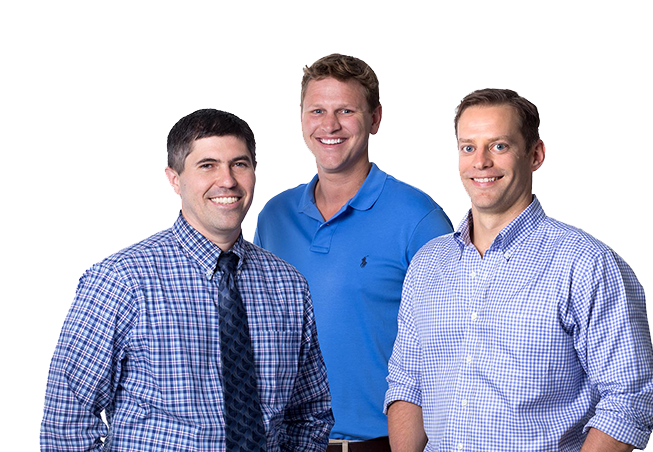
Childhood friends Bobby Nicely, Billy Siple, and Rob Lindstrom shared a vision of building something meaningful, inspired by their roots in Alleghany County, Virginia. As a result, this dream led to the founding of ALCOVA Mortgage in 2003, a company named after their home county to honor their beginnings.
Moreover, driven by a passion to simplify the mortgage process, Bobby Nicely reflected, “When I bought my first house, I realized how confusing it could be. I thought, ‘There has to be a better way.’” Therefore, this commitment to better service shaped ALCOVA’s mission.
In 2012, ALCOVA achieved a significant milestone by being recognized on the prestigious Inc. 5000 list of the fastest-growing private companies in America. This accomplishment marked the company’s relentless growth and dedication to serving communities.
Today, ALCOVA continues to thrive, grounded in its founding values of friendship, service, and innovation. Ultimately, the company remains committed to helping homeowners achieve their dreams with a personalized approach that sets it apart in the mortgage industry.